At a glance
RECORDED PROFILE DATA- Scientific name
- Angraecum lecomtei H.Perrier
- Name status
- Accepted
- Native region
- Madagascar (northeastern)
- Growth habit
- Epiphytic subshrub
- Cultivation temperature group
- Not documented
Names and Taxonomy
The accepted scientific name for this species is Angraecum lecomtei H.Perrier, first described in Notulae Systematicae 7:119 (1938)【2】. Kew’s Plants of the World Online (POWO) lists the name as accepted and records the native range as eastern‑northeastern Madagascar【1】. A later homotypic synonym, Perrierangraecum lecomtei (H.Perrier) Szlach., Mytnik & Grochocka, was published in 2013 but is treated as a synonym of A. lecomtei by POWO【6】. No common (vernacular) name is documented in the consulted sources.
How to Identify This Species
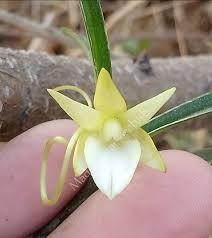
Published sources provide only limited morphological information. The species is described as an epiphytic subshrub growing on trees in wet tropical forests【1】. Detailed descriptions of leaf shape, stem length, flower colour, size, lip morphology, or fragrance are not available in the current references, so reliable field identification must rely on herbarium specimens or expert verification. Growers should compare any cultivated material with authenticated herbarium images where possible.
Native Range and Habitat
Angraecum lecomtei is endemic to Madagascar, with records concentrated in the northeastern part of the island【1】【9】【10】. It inhabits the wet tropical biome, typically as an epiphyte on tree branches in humid forest canopies. Specific elevation limits have not been reported in the available data.
Species-Specific Care
| Factor | Documented guidance | Source / Note |
|---|---|---|
| Growth medium | Not documented | No species‑specific recommendation found. |
| Mounting vs. potting | Not documented | Only general epiphytic habit is known. |
| Light | Not documented | Typical Angraecum species prefer bright, filtered light, but no data for this taxon. |
| Temperature | Not documented | Native habitat is warm tropical; exact temperature range not published. |
| Watering / humidity | Not documented | Wet forest origin suggests high humidity, but no measured guidance. |
| Fertilisation | Not documented | |
| Seasonal rest | Not documented |
Because detailed horticultural information is lacking, growers are advised to follow general care guidelines for epiphytic Angraecum orchids: provide a well‑aerated bark mix, maintain high humidity (70‑80 %), avoid direct midday sun, and keep temperatures in the 20‑28 °C range. Monitor the plant for signs of stress and adjust cultural conditions accordingly. These suggestions are extrapolated from genus‑level practice and are not species‑specific evidence.
Flowering and Pollination
No published data on the flowering period, flower morphology, fragrance, or pollinators of A. lecomtei were found in the consulted sources. Consequently, any statements about its phenology or pollination ecology would be speculative.
Conservation and Responsible Cultivation
The International Union for Conservation of Nature (IUCN) lists Angraecum lecomtei as Vulnerable (2025 assessment)【6】. It is also included in CITES Appendix II, regulating international trade【6】. Angiosperm Extinction Risk Predictions (2024) classify the species as “Threatened” with a confident assessment【2】. Conservation of its forest habitat in northeastern Madagascar is therefore critical. Cultivators should ensure that any plant material is sourced from reputable, legally compliant suppliers who can provide provenance documentation.
Evidence and Limitations
This profile is based on taxonomic and conservation information from Kew’s Plants of the World Online, IPNI, the IUCN Red List (as cited on Wikipedia), GBIF occurrence data, and a few orchid compendia that mention the species’ geographic range. Detailed morphological descriptions, precise habitat parameters (elevation, host tree species), and species‑specific horticultural guidelines are not documented in the available sources. Future field studies and cultivation trials are needed to fill these gaps.
Frequently asked questions
What is the conservation status of Angraecum lecomtei?
It is listed as Vulnerable on the IUCN Red List (2025 assessment) and is included in CITES Appendix II, indicating that trade is regulated.
Can I grow Angraecum lecomtei at home?
Specific cultivation instructions for this species are not documented. Growers should follow general care guidelines for epiphytic Angraecum orchids and ensure any plant material is sourced legally.
FOLLOW THE EVIDENCE
Sources & references
- Angraecum lecomtei H.Perrier | Plants of the World Online | Kew Science, https://powo.science.kew.org/taxon/urn:lsid:ipni.org:names:616222-1
- Angraecum lecomtei | International Plant Names Index, https://www.ipni.org/n/616222-1
- Angraecum lecomtei – Wikipedia, https://en.wikipedia.org/wiki/Angraecum_lecomtei
- Angraecum lecomtei – GBIF, https://www.gbif.org/taxon/66QTR
- Angraecum lecomtei – Clan Orchids Compendium, http://www.clanorchids.com/compendium/page3a.html
- Perrierangraecum lecomtei (H.Perrier) Szlach., Mytnik & Grochocka | Plants of the World Online | Kew Science, https://powo.science.kew.org/taxon/urn:lsid:ipni.org:names:77139220-1

